What to carry
- Walking shoes with grip, because the steps are uneven and often wet
- A hat, sunscreen and at least a litre of water
- Cash for the ferry, the island toll and lunch
- A notebook. Photography is allowed; tripods are not
Two days: the iconography of Shiva in the classroom, then the caves themselves, read stone by stone.
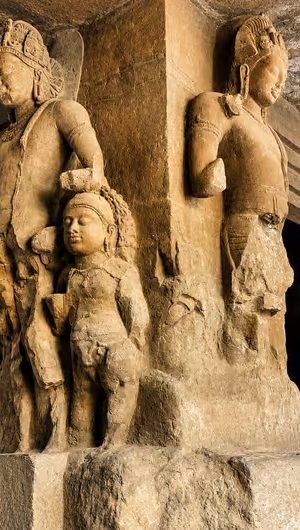
Elephanta is the most photographed cave complex in the country and the least read. Most visitors give it forty minutes, take a picture of the Trimurti, and leave without knowing what they were looking at.
This programme takes two days over it. The first is spent in the classroom, on how Shiva is depicted and why: the attributes, the gestures, the recurring scenes, and the argument the sixth-century sculptors were making about who this god was. The second is spent in the caves themselves, reading the full sequence in order, on site, with the previous day's material in hand.
The point is not Elephanta alone. It is a method you can take to any Hindu site afterwards and use on your own.
And left with the feeling that you were missing the argument.
Nothing is assumed, and there is no prior reading.
Architecture, art history, or plain curiosity.
A way of reading iconography that works at any Hindu site.
Every cave at Elephanta, understood in the order it was meant to be read.
The sources we work from, if you want to go further.
Two sessions of ninety minutes. How the god is depicted, what the attributes mean, and how the Elephanta programme differs from the Deccan caves that came before it.
Ferry from the Gateway of India, then the full sequence of caves on the island, read in person against the previous day's material. Return by early evening.
Day two involves an hour on an open ferry, roughly 120 stone steps from the jetty to the caves, and four to five hours on your feet, much of it outdoors in October heat. There is a lift-free climb with no alternative route.
Tell us when you book if you would like us to plan around limited mobility. We will be honest about what is possible.
Ferry tickets both ways, the island entry fee and the ASI monument ticket are bought on the day, in cash, by each participant. Lunch on the island is your own. Budget roughly ₹ 0,000 beyond the programme fee.
Ferries do not sail in rough weather. If day two is called off we run it on the next available Sunday; if you cannot make that date we refund the field day in full.
16 and over. Participants are responsible for their own safety on the island and travel at their own risk; BAUfabrique does not provide travel or medical insurance. You will be asked to confirm this when you book.
src/_data/editions.json and its photographs to media/programmes/elephanta/<date>/.
Photographs from the session.